Preparing the Wall, Sharing the Voice: A 2026 Venue Checklist for Keiskamma Loan Exhibitions
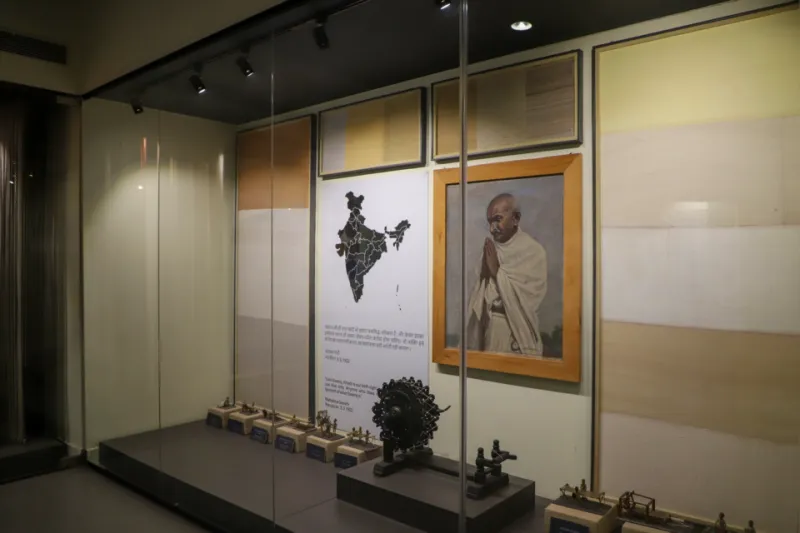
Photo: Niranjan Adostrophe, CC BY-SA 4.0, via Wikimedia Commons
For American museums, libraries, and community galleries, a Keiskamma exhibition begins long before the first crate is opened. It begins with a decision about whose voice will organize the room. In 2026, US venues have a practical opportunity to host community-made textiles while treating the makers as living partners rather than as sources of ornament. The following planner is not a substitute for a registrar, a conservator, or a loan agreement. It is a checklist for keeping the relationship at the center of the logistics.
Start with the loan relationship, not the object list
Approach Keiskamma Art Project at least nine to twelve months before a proposed opening. Explain the venue, the intended audience, the interpretive frame, and the budget for maker fees and community consultation. Ask which works are available and which are too fragile, too politically sensitive, or too closely tied to a particular family or workshop to travel. A loan request should identify each maker by name and role, with title, date, materials, dimensions, and preferred credit line. Condition reports should include clear photographs and notes on previous repairs. Insurance, crating, customs brokerage, and courier arrangements belong in the first draft of the budget, not in the final week.
US venues can reduce cost and risk by forming a regional tour with two or three partners. A shared crate, a single courier itinerary, and coordinated condition checks can make a modest exhibition feasible for a library gallery or a university museum that could not mount a standalone show. The key is to schedule rest periods for textiles and to avoid treating the tour as a continuous, frictionless circuit.
Interpret with names, process, and context
Labels should say who made the work, where the workshop is based, and what the piece depicts or records. Avoid adjectives such as tribal, authentic, or exotic. Avoid grouping every object under a single national label. If community partners agree, include isiXhosa and English text, a glossary, and a short note on the materials and labor involved. A process photograph or a recorded explanation can be more useful than a long wall text, but images and recordings require the same consent as the textiles themselves.
Interpretation should also explain why the work exists. Keiskamma textiles often carry stories about care, land, health, faith, and collective memory. The exhibition does not need to resolve those stories. It does need to avoid reducing them to decorative pattern. A good test is whether a maker would recognize the label as accurate and whether a US visitor would understand that the work comes from a working community, not from an anonymous craft tradition.
Put accessibility and consent in the same budget line
Accessibility is not an add-on. It includes large-print labels, audio description, seating, clear routes, captioning for video, and quiet hours for visitors who need them. US venues should meet ADA expectations and go further where possible. A tactile sample or a handling object can help, but original textiles should not be touched unless the lender explicitly agrees.
Consent is equally practical. Ask the community which images, names, and stories may be used in promotion, catalogues, and digital platforms. Confirm whether consent extends to future tours or only to the current venue. Budget for translation, review time, and recorded interviews. If a story involves health, family, or political history, offer a clear process for redaction. Consent is not a signature collected once; it is an ongoing agreement that may change as the exhibition travels.
Choose modest display strategies that protect the work
Low-cost display does not mean careless display. Use existing vitrines, adjustable LED fixtures with UV filtration, blackout shades, and acid-free tissue or padded mounts. Keep light levels low and rotate works according to conservation advice. Avoid direct sunlight, hot spots, and framed glass that creates reflections. Printed vinyl, modular walls, and recycled plinths can stretch a small budget without pretending to be a major museum installation.
Where possible, put money into the things visitors cannot see: a stable climate, a secure case, a trained installer, and a clear credit panel. Those choices protect the textiles and signal respect for the makers. A simple, well-lit room with accurate labels is stronger than an elaborate display that treats the work as scenery.
Budget the invisible work
A credible 2026 budget includes maker fees or loan fees, community consultation, translation, shipping, insurance, courier costs, installation, accessibility, documentation, and contingency. US funders such as state humanities councils, local arts agencies, and the National Endowment for the Arts may support public programs and interpretation, but grant applications take time. Do not promise exposure in place of payment. Do not assume that a donation to the tour replaces a fee to the community.
Measure success by recognition
A successful host does not count only attendance or press. It asks whether makers recognize their own voices in the labels, whether community partners were paid for their time, whether visitors left with a more accurate understanding of the region, and whether the loan ended with the relationships intact. In 2026, the best US venues will treat a Keiskamma exhibition as a temporary partnership, not a decorative acquisition. The wall can be prepared. The voice must be shared.