Stitching Locally, Citing Carefully: A 2026 Practical Guide to Community Embroidery Circles
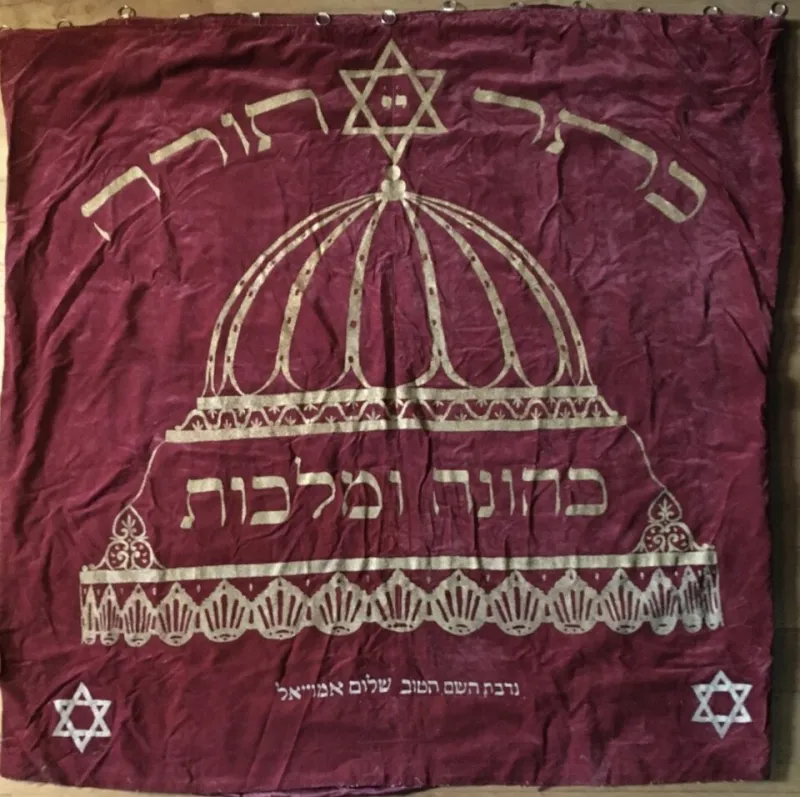
Photo: Anonymous (Sephardic workshop), Public domain, via Wikimedia Commons
A community embroidery circle is not a complicated idea. A table, some cloth, a few needles, and a room full of people willing to talk while they work will do most of the job. But a circle inspired by Keiskamma's methods carries responsibilities as well as pleasures. The aim is not to copy Keiskamma's motifs or claim its name, but to learn from its example of collaborative storytelling and to connect participants back to the Keiskamma Art Project in a respectful way.
Start with a Clear Purpose
Before advertising a meeting, decide what the circle is for. Is it a local history project? A program for a quilting guild? A church fellowship activity? A library workshop for teens? A school art unit? Each setting calls for a different structure and a different level of commitment.
Write a one-page purpose statement that names the project as Keiskamma-inspired, not Keiskamma-authored. This distinction matters. Keiskamma is a specific arts project in the Eastern Cape of South Africa, with its own makers, history, and governance. A group in Ohio or Oregon can be inspired by its methods without borrowing its identity.
Materials That Welcome Beginners
Accessible materials are essential. Not every participant will have experience with embroidery, and not every group will have a budget. Keep the supply list modest: medium-weight cotton or linen fabric, embroidery floss in a limited palette, embroidery needles with large eyes, wooden hoops in several sizes, scissors, and a shared box of threads. Thrifted fabric and donated floss are entirely appropriate.
Avoid requiring specialist equipment or expensive kits. The point is participation, not perfection. A simple running stitch, backstitch, and satin stitch are enough to begin. Provide a short demonstration at the first meeting and a printed stitch reference for those who prefer to work independently.
Story Prompts That Invite Memory
Keiskamma narrative textiles often begin with ordinary life: houses, gardens, roads, churches, animals, water, and work. Use prompts that invite local memory without demanding confession or performance. Good prompts are specific enough to spark a story and open enough to let people choose their own level of disclosure.
Consider asking: What landmark would you miss if it disappeared? Who taught you a practical skill? What sound defines your neighborhood? What object in your family carries a story? Where do you go when you need to think? What did the street look like when you were a child?
Participants can sketch a simple scene before stitching, or they can work directly on cloth. Some will want to talk; others will prefer to listen. Both are valid forms of participation.
Attribution and Cultural Respect
Ethical attribution should be explained at the first meeting, not added at the end. Name the Keiskamma Art Project as the inspiration for the circle's method. Make clear that the finished work is a local community project, not an official Keiskamma work. Credit individual makers by name wherever possible, and obtain consent before displaying personal stories or identifiable scenes.
Do not reproduce Keiskamma motifs as decorative branding. Learn from the project's emphasis on collective narrative, but develop imagery from your own place and participants. If the group plans to publish photographs or exhibition materials, include a short statement explaining the project's inspiration and linking to keiskammaartproject.org for context.
A Simple Exhibition and Donation Plan
A public component gives the circle a natural conclusion and a reason for participants to finish. Keep it modest. A display at a local library, church hall, community center, or school corridor is enough. Include a brief wall text that explains the project's purpose, names the participants, and identifies Keiskamma as the inspiration.
If the group wants to support Keiskamma directly, organize a voluntary donation rather than selling the work. Direct participants to the Keiskamma Art Project's official website for donation information. Do not imply an official partnership unless one exists. A small collection box at the exhibition, with a clear note that proceeds go directly to the project, is simple and transparent.
A Six-Week Sample Schedule
Week one: introductions, purpose statement, materials distribution, and a simple stitch demonstration. Week two: story prompts and sketching. Week three: begin stitching individual panels. Week four: continue stitching and share progress. Week five: assemble panels and prepare wall text. Week six: install the display and hold a short opening or sharing session.
This schedule can be stretched or compressed. The important thing is to leave room for conversation. A circle that finishes every stitch on time but never hears a story has missed the point.
What Success Looks Like
Success is not a flawless textile. It is a group of people who have made something together, learned a method with integrity, and connected their local memories to a wider practice. If participants leave with a better understanding of Keiskamma's work and a willingness to support it, the circle has done its job.