Cloth, Consent, and Custody: An American Collector’s Acquisition Framework for 2026
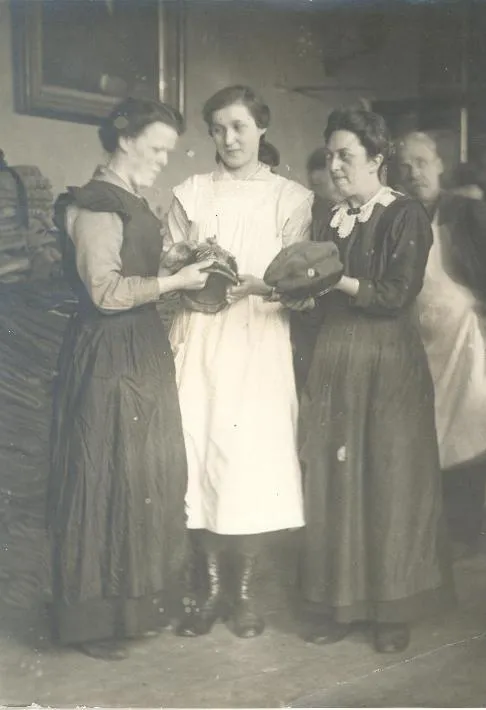
Photo: TWAM - Tyne & Wear Archives & Museums, No restrictions, via Wikimedia Commons
Acquisition Begins Before the Invoice
For American museums, galleries, and private collectors, a Keiskamma textile can appear to arrive with two lives. The first is visible: stitch, dye, narrative, and the presence of many hands. The second is documentary: the records, permissions, and relationships that explain how the work traveled from a community workshop to a US collection. A responsible acquisition treats both lives as inseparable.
The central question is not simply whether a buyer can afford the work. It is whether the buyer can describe, with evidence, how the work came to be, who made it, what the makers intended, and whether the community consents to the story traveling with the cloth. In 2026, as interest in community-made South African textiles continues to grow, that standard should be ordinary rather than exceptional.
Provenance Is a Chain, Not a Sentence
Provenance is often reduced to a single line: purchased from a gallery, donated by a collector, or acquired from a dealer. For community textiles, that is rarely enough. Ask for the fuller chain: the maker or workshop, the commissioning context, the first sale, any exhibition history, and the sequence of prior owners. Date the documents. Keep correspondence. Preserve original labels, receipts, and photographs of the work in situ.
A useful distinction is between provenance and narrative. Provenance establishes custody. Narrative explains meaning. A buyer needs both, but one cannot substitute for the other. A receipt does not prove that the makers approved the way their story will be displayed, and a moving label does not prove that the work was acquired fairly.
Attribution Requires Conversation
Community-made textiles are frequently described as anonymous, traditional, or collectively produced. Such language can be accurate in some contexts, but it can also erase individual authorship. Ask how the makers wish to be identified. Some works may carry a single artist’s name; others may credit a workshop, a group, or a named project. Some makers may prefer not to be named publicly. The point is not to impose a single model of authorship but to record attribution according to the makers’ wishes.
For museum cataloging, avoid defaulting to ‘unknown’ when the information exists but has not been requested. Ask whether credit lines should include a community, a workshop, or individual embroiderers. If multiple hands contributed, say so. If a work was made collaboratively, describe the collaboration without turning it into a generic folk label.
Payment Structures Should Match the Making
Acquisition conversations should establish who is paid, when, and for what. A purchase price may cover the work itself, but it may not cover shipping, conservation, framing, or the labor of documentation. Clarify those costs early. For US buyers, import duties, customs brokerage, and insurance are part of the true cost of acquisition and should not be quietly deducted from the maker’s side.
Avoid framing a discounted purchase as philanthropy. If a buyer wants to support ongoing community programs, that support should be discussed as a separate commitment rather than used to压低 the price of the work. Fair payment is not a favor; it is part of the object’s ethical provenance.
Consent Is Separate from Sale
A sale transfers an object. It does not automatically transfer the right to publish names, reproduce images, retell sensitive histories, or use a community’s story in fundraising. Ask for consent in writing, and make the scope specific: catalog publication, website display, educational use, photography, and future research. If the work depicts people or events, ask whether those depictions may be shown and described publicly.
Museums should build in time for community review before a catalog or wall text is finalized. Private collectors should be equally careful, especially if they plan to lend, publish, or post images online. Consent is not a single signature; it is an ongoing relationship that may need renewal when the use changes.
Display Language Should Travel with the Cloth
Labels are part of acquisition, not an afterthought. A strong label names the makers or workshop as agreed, identifies the place and date, describes materials and techniques, and explains the work’s context without overclaiming. Avoid words such as ‘tribal,’ ‘primitive,’ or ‘authentic’ unless the makers themselves use them with clear intent. Avoid reducing a narrative textile to decoration.
Where possible, include the acquisition story: how the work came to the collection, what the makers wished to convey, and what remains unknown. A label that admits uncertainty is more honest than one that invents continuity.
A 2026 Acquisition Checklist
- Request a written provenance summary, including prior owners and exhibition history.
- Confirm attribution preferences with the makers or their representatives.
- Establish a payment schedule that separates the work, shipping, insurance, and any community support.
- Obtain written consent for image use, naming, and public storytelling.
- Ask for a condition report and photographs of the front and reverse.
- Budget for conservation, mounting, framing, and UV-filtering glazing.
- Clarify import duties, customs documentation, and transit insurance before purchase.
- Agree on label language with the makers where possible.
- Record any restrictions on display, publication, or lending.
- Schedule a review of the acquisition after the work is installed.
When to Pause
A buyer should be willing to walk away when provenance is vague, when attribution is refused without explanation, when consent is treated as a formality, or when the seller pressures a quick decision. The strongest collections are not built on urgency. They are built on records that allow future viewers to understand not only what was acquired, but how, and on what terms.