Hanging History: A Practical Care Primer for Keiskamma Textiles in American Homes
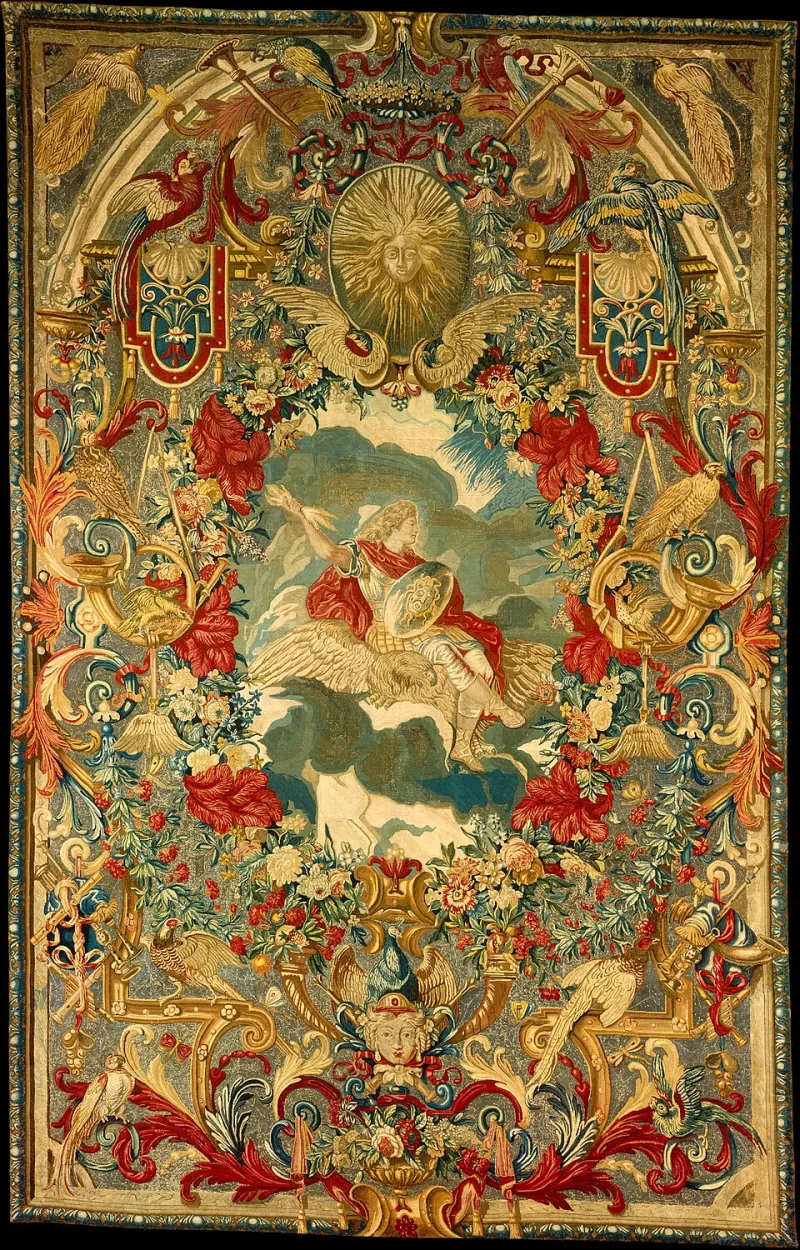
Photo: Charles Le Brun / Jean Lemoyen le Lorrain / Convent of Saint Joseph-de-la-Providence, Paris, CC0, via Wikimedia Commons
The Work Begins Again at the Wall
A Keiskamma textile does not stop telling its story when it leaves the workshop. In an American home, the next chapter is written by the way the work is hung, lit, cleaned, framed, and explained. Care is not housekeeping. It is part of stewardship, and it determines whether the cloth remains a narrative object or becomes background decoration.
Before choosing a wall, spend time with the object. Note its weight, its embroidery, its dyes, its lined or unlined structure, and any fragile areas. Photograph the front and reverse. Record what you know about the maker, the community, the date, and the acquisition. That simple record is the beginning of responsible display.
Read the Object Before You Hang It
Not every textile is ready for hanging. Large embroidered works may need a rigid support to distribute weight. Older pieces may have weakened fibers, unstable dyes, or prior repairs that should not be disturbed. If the work has been stored folded for years, consult a conservator before pressing or mounting it. Do not iron embroidery directly, and do not assume that a professional dry cleaner understands textile art.
Check the reverse side for labels, seams, and earlier mounting marks. Keep those traces. They are part of the object’s history and can help future owners understand how it was made and displayed.
Hanging Without Strain
Avoid hanging a textile from a single nail, a tight rod, or a frame that pinches the edges. For many works, a rigid board covered with washed cotton or muslin, padded with polyester batting, and attached with a linen strap or low-tack fastener system is safer than direct suspension. The goal is even support, not tension.
For heavy or fragile pieces, hire a textile conservator or a professional installer with textile experience. If you use a rod, make sure it is wide enough and that the fabric is not bearing the full weight at a few points. Keep the work away from direct contact with painted walls, which can transfer oils or moisture.
Light, Climate, and the American Interior
Ultraviolet light fades dyes and weakens fibers. Place the work away from direct sun, skylights, and strong reflected light. UV-filtering glazing helps, but it does not make direct sun safe. Rotate the work every six to twelve months, especially if it hangs in a bright room.
Aim for stable temperature and relative humidity, generally in the range of 45 to 55 percent RH, while avoiding rapid swings. In US homes, forced-air vents, radiators, fireplaces, kitchens, and bathrooms are poor locations. Winter dryness and summer humidity can both stress fibers. A simple hygrometer can help you notice change before damage appears.
Cleaning: Less Is More
Do not wash, soak, or dry clean an embroidered narrative textile unless a conservator has approved the method. Surface dust can sometimes be removed by placing a fine screen over the cloth and using a vacuum on the lowest setting with a soft brush attachment. Work slowly and never let the nozzle touch the embroidery.
For stains, pest damage, or unstable dyes, stop and seek conservation advice. Home remedies can set stains or alter colors. If the work is framed, avoid spraying cleaners near the glazing or letting moisture seep behind the frame.
Framing and Mounting
Framing should protect the textile, not flatten it. Use acid-free materials, UV-filtering glazing, and spacers so the glazing does not press against the embroidery. The backing should be rigid and stable. Avoid trimming, gluing, or stitching the work to a board. If the textile has fringe, tassels, or dimensional embroidery, allow depth inside the frame.
Keep original labels and acquisition documents with the work, not in a separate file that may be lost. A small archival envelope attached to the back of the frame can hold a condition note, provenance summary, and care instructions.
Rotation and Storage
Rotating works protects them from prolonged light exposure and gives rooms a changing relationship to the collection. Store textiles in a cool, dry, dark place, away from attics, basements, and exterior walls. Roll large pieces on a padded tube, interleaving with acid-free tissue, or store them flat if space allows. Avoid plastic bags that trap moisture. Inspect stored works annually for pests and creasing.
Labels That Keep the Story Visible
A wall label need not be long. Include the title or description, the maker or workshop as agreed, the community and region, the date, materials, dimensions, and the acquisition story. If the makers preferred limited attribution, honor that preference. Add one sentence about what the work depicts or why it was made, using language approved by the makers where possible.
Guests often ask about textiles. A short provenance card kept nearby, or a small binder with photographs and correspondence, lets you share the story without turning the work into a lecture. The label should invite attention, not close it down.
A Simple Care Calendar for 2026
Check the work each season for dust, pests, fading, or loosening mounts. Rotate it once or twice a year. Refresh the label if new information arrives. Review insurance and condition records annually. If you lend the work, send the care notes and provenance summary with it.
A Keiskamma textile is not diminished by practical care. It is kept alive by it. The cloth holds a story; the wall, the light, and the label decide whether that story remains legible to the next person who stands before it.